
Why Japanese Homes
Feel Calm
The Quiet Power of Simplicity and Order
Many people who visit Japan for the first time notice something subtle—but powerful—about Japanese homes.
They feel calm.
Not luxurious. Not oversized. Not filled with statement furniture or bold design choices.
Yet somehow, they feel mentally spacious. Even small apartments seem to breathe.
This calmness is not accidental.
It is the result of long-held cultural values that treat the home not as a display of wealth or personality, but as a tool for daily well-being.
In Japan, simplicity is not a trend.
It is a lived practice.
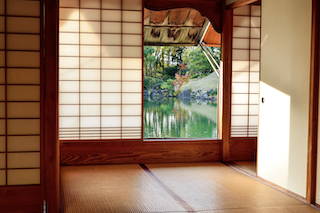
Calm Is Designed, Not Decorated
In many cultures, homes are designed to express.
In Japan, homes are designed to support.
Support quiet mornings.
Support tired bodies returning from work.
Support families moving through shared spaces without friction.
Rather than asking, “What looks good?”, Japanese home design often asks:
“What allows life to flow more smoothly?”
This mindset shifts priorities:
• Fewer objects, chosen intentionally
• Clear pathways and open floor space
• Furniture that adapts, folds, or disappears when not needed
Calm is created not by adding beauty, but by removing obstacles—visual, physical, and mental.
The Meaning of “Ma”: Space With Purpose
A key concept behind Japanese interiors is 間(Ma)—the intentional space between things.
Ma is not emptiness for its own sake.
It is functional silence.
Just as pauses give music meaning, empty space gives objects—and people—room to exist without tension.
In the home, Ma appears as:
• Clear surfaces instead of constant clutter
• Rooms that serve multiple purposes depending on time of day
• Furniture arranged to preserve openness rather than fill space
This space reduces subconscious stress. The brain processes fewer stimuli, allowing attention and emotions to settle naturally.
Order as a Form of Kindness
Order in Japanese homes is not about perfection or strict rules.
It is about consideration.
Consideration for:
• Your future self
• Other family members
• Daily routines that repeat quietly, every day
Objects are given designated places not to control behavior, but to eliminate unnecessary decision-making.
When keys always live in the same spot,
when shoes line up at the genkan,
when daily tools are easy to return—
Life becomes lighter.
This kind of order is not rigid minimalism.
It is gentle structure that protects mental energy.
Minimalism Without Aesthetic Pressure
Western minimalism often focuses on appearance: clean lines, neutral colors, curated emptiness.
Japanese simplicity focuses on usefulness and harmony.
A Japanese home may still contain:
• Personal mementos
• Seasonal decorations
• Everyday wear and tear
But everything earns its place through function or emotional meaning.
The goal is not to own less for the sake of it, but to avoid owning things that demand attention without giving value.
This is why Japanese simplicity feels warm rather than sterile.
Daily Habits Shape the Space
The calm of Japanese homes does not come from one-time decluttering.
It comes from small, repeatable habits.
Simple actions practiced daily:
• Putting things back after use
• Cleaning lightly but consistently
• Adjusting spaces seasonally rather than accumulating
These habits prevent chaos from building up in the first place.
Instead of dramatic clean-ups, Japanese homes rely on maintenance over correction—a philosophy that mirrors many aspects of Japanese life.
A Home That Calms the Mind
Ultimately, Japanese homes feel calm because they are designed around human limits.
They respect:
• Mental fatigue
• Physical tiredness
• The need for quiet transitions between work and rest
By reducing visual noise, minimizing friction, and preserving space, the home becomes a place where the nervous system can downshift naturally.
Not through meditation apps or wellness products—but through thoughtful living.
Simplicity as Everyday Care
In Japan, simplicity is not self-denial.
It is self-care practiced quietly, every day.
A calm home is not something to show others.
It is something you feel when you take off your shoes, set your bag down, and exhale.
And perhaps that is the real lesson Japanese homes offer the world:
Well-being does not need to be loud to be powerful.